Kamchatka krai is a federal subject of Russia located in the Far East of the country, in the Far Eastern Federal District. Petropavlovsk-Kamchatsky is the capital city of the region.
The population of Kamchatka krai is about 316,000 (2015), the area - 464,275 sq. km.


The capital city of Kamchatka Krai: Petropavlovsk-Kamchatsky.
Overview
Kamchatka krai is a federal subject of Russia located in the Far East of the country, in the Far Eastern Federal District. Petropavlovsk-Kamchatsky is the capital city of the region.
The population of Kamchatka krai is about 316,000 (2015), the area - 464,275 sq. km.
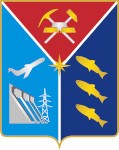
Flag and Coat of Arms


History
The first people inhabited Kamchatka in the early Neolithic. Since the Stone Age, the tribes of Koryak, Itelmen and Ainu settled in this territory. The total population mainly engaged in hunting and fishing was sparse. In the 17th century, Russians began to explore Siberia and the Far East. In the 1730s, permanent Russian population appeared and because of its scarcity it largely mixed with the natives.
In 1849, Kamchatka oblast was formed with the center in the town of Petropavlovsk port (present Petropavlovsk-Kamchatsky). In 1909, Kamchatka guberniya (province) was formed. October 20, 1932, Kamchatka oblast was established as part of Khabarovsk krai.
January 23, 1956, it became an independent region. Koryak Autonomous Okrug was located on its territory. October 23, 2005, a referendum on the unification of Kamchatka oblast and Koryak Autonomous Okrug was held. In 2007, a new federal subject of Russia appeared - Kamchatka krai.
Features
Kamchatka region occupies the Kamchatka Peninsula and the adjacent part of the mainland, Karaginsky Island and Commander Islands. The northernmost point of the peninsula is located at the latitude of Arkhangelsk, the southernmost - Kiev (Ukraine). The Bering Sea (the Pacific Ocean) washes the territory in the east of the region (the length of the coast is more than 2,000 km), the Sea of Okhotsk - in the west (about 2,000 km).
Kamchatka is a zone of volcanic activity, there are about 300 large and medium-sized volcanoes, 29 of them are active. Klyuchevskaya Sopka stratovolcano is the highest mountain on the peninsula and the highest active volcano in Eurasia. About 14,100 rivers and streams flow through the region. The main rivers are Kamchatka (758 km), Penzhina (713 km), Talovka (458 km), Vyvenka (395 km), Pahacha (293 km), Apuka (296 km), Ukelayat (288 km).
Fauna is represented by a variety of species, the largest land mammals are brown bear, snow sheep, reindeer, moose, wolverine.
The region’s economy is based on fishing industry (fishing and seafood processing), agriculture, production of natural gas, coal, non-ferrous metals, electric power industry (including the development of non-conventional geothermal energy), tourism. Kamchatka krai has only three cities: Petropavlovsk-Kamchatsky (181,000), Yelizovo (39,000), Vilyuchinsk (22,000).
Climate
The climate is subarctic in the northern part of the region, temperate maritime, monsoon - on the coast, continental - in the interior districts. Winters are long and snowy, the average temperatures in January and February range from minus 7-8 degrees Celsius in the south and south-east, minus 10-12 degrees C in the west, to minus 19-24 degrees C in the center and north.
Summers are short, usually cool and rainy, the average temperatures in July and August range from plus 10-12 degrees C in the west, plus 12-14 degrees C in the south-east, to plus 16 degrees C in the central part.
Tourism
More than 14.5% of Kamchatka krai refers to specially protected natural areas. The six zones called “Volcanoes of Kamchatka” are included in the UNESCO World Heritage List: the Kronotsky Biosphere Reserve, the caldera of Uzon volcano, Bystrinsky Natural Park, Natural Park Nalychevo, South Kamchatka Nature Park, Klyuchevskoy Nature Park.
The summer-autumn period is favorable for climbing volcanoes, ecotourism, coastal cruises on the Avacha Bay, sport hunting and fishing, rafting, diving, kayaking in the sea, ornithological and scientific-educational tourism, golf.
The winter-spring season is favorable for heli-skiing, dog sledding and snowmobiling, skiing, snowboard, sport hunting, ski tours, swimming in hot springs and ice fishing.
Tourism in Petropavlovsk-Kamchatsky is associated with visits to museums, ski resorts near the city, climbing volcanoes and a trip to the Pacific coast (Khalaktyrsky beach).
Some museum attractions can also be found in Ust-Bolsheretsk, Ust-Kamchatsk, Milkovo, and Esso. The main hot springs are located in the village of Paratunka. Ethno-tourism events are held in the villages of Esso and Anavgay.
National parks and reserves:
- Nalychevo Natural Park. This park is one of the most visited places because it is located about 25 km from Petropavlovsk-Kamchatsky. The valley of the Nalycheva River, surrounded by active and extinct volcanoes of Avacha and Dzendzur-Zhupanovsky groups, is the main part of the park. Also there are thermal springs.
- Bystrinsky Natural Park. It is located near the village of Esso. The main attractions are Lake Ikar, Koryak camp “Chiu-Chiv”, Evenk camp “Menedek”. In late February - early March, the Day of Reindeer Herders is celebrated here and the sled dog race “Beringia” starts in one or two weeks.
- Klyuchevskoy Park. The park is situated near Klyuchi and Kozirevsk villages. The main attractions are the Kamchatka River, glaciers and 13 large volcanoes.
- Yuzhno-Kamchatsky Natural Park. This park is located 60 km south of Petropavlovsk-Kamchatsky and is known for Mutnovsky volcano, the caldera of Ksudach volcano, Khodutkinskiye thermal springs, Ksudachinskie sources.
- Kronotsky State Nature Biosphere Reserve - one of Russia’s oldest nature reserves. The main natural attraction of the reserve is the Valley of Geysers - one of the largest geyser fields in the world and the only in Eurasia.
- Koryaksky State Natural Reserve located in the north of Kamchatka.
- Komandorsky State Nature Biosphere Reserve located on the Commander Islands.