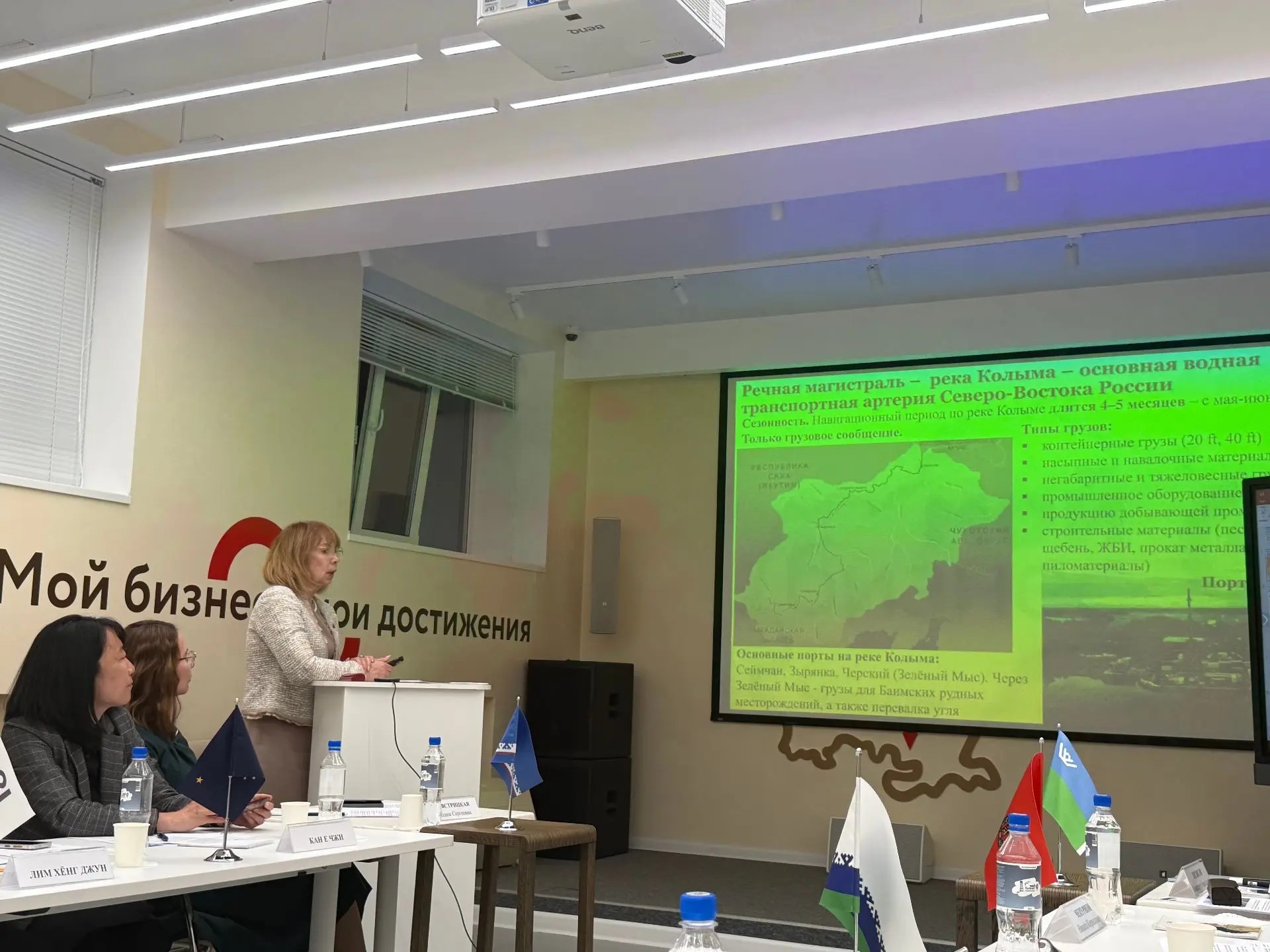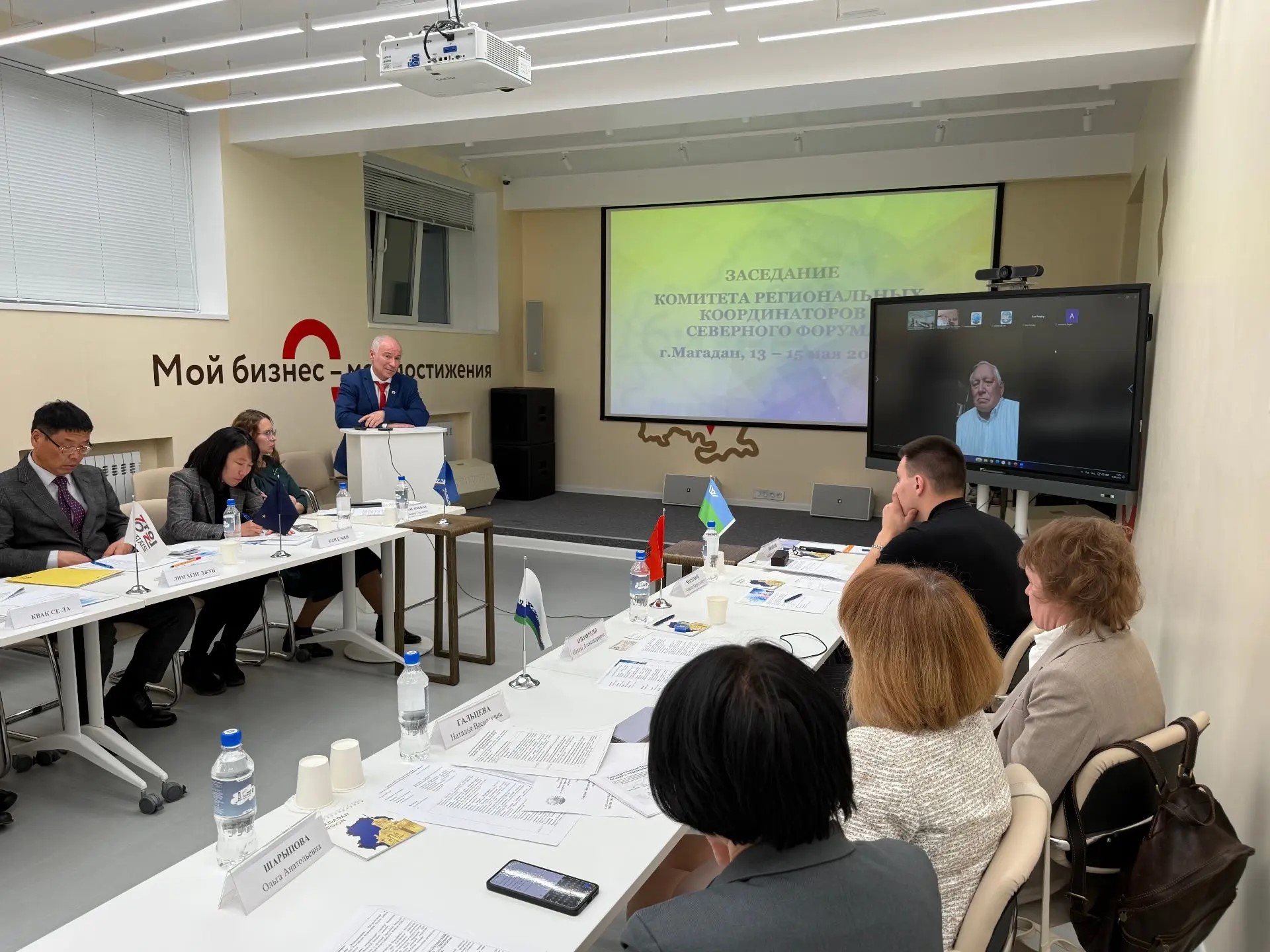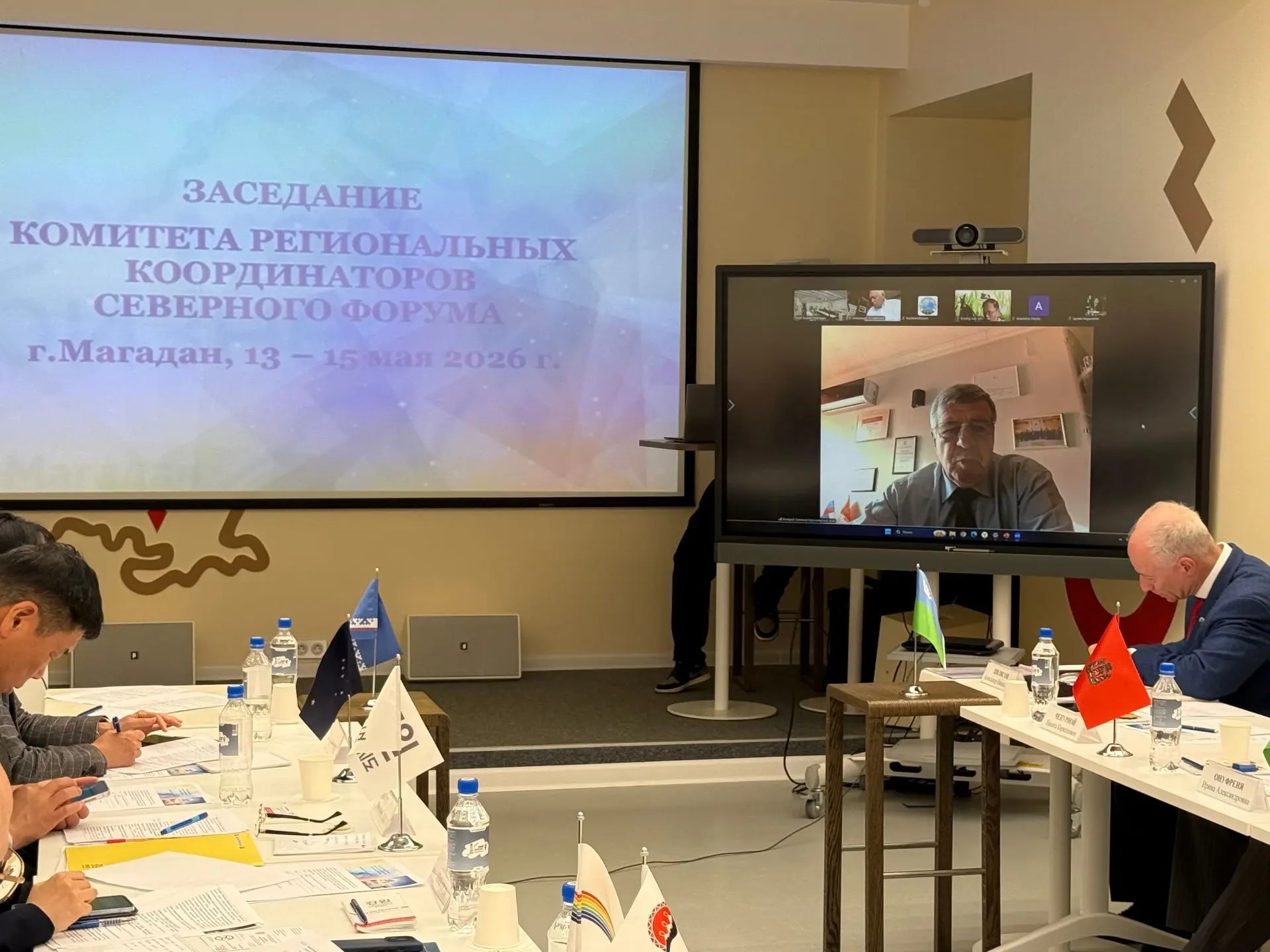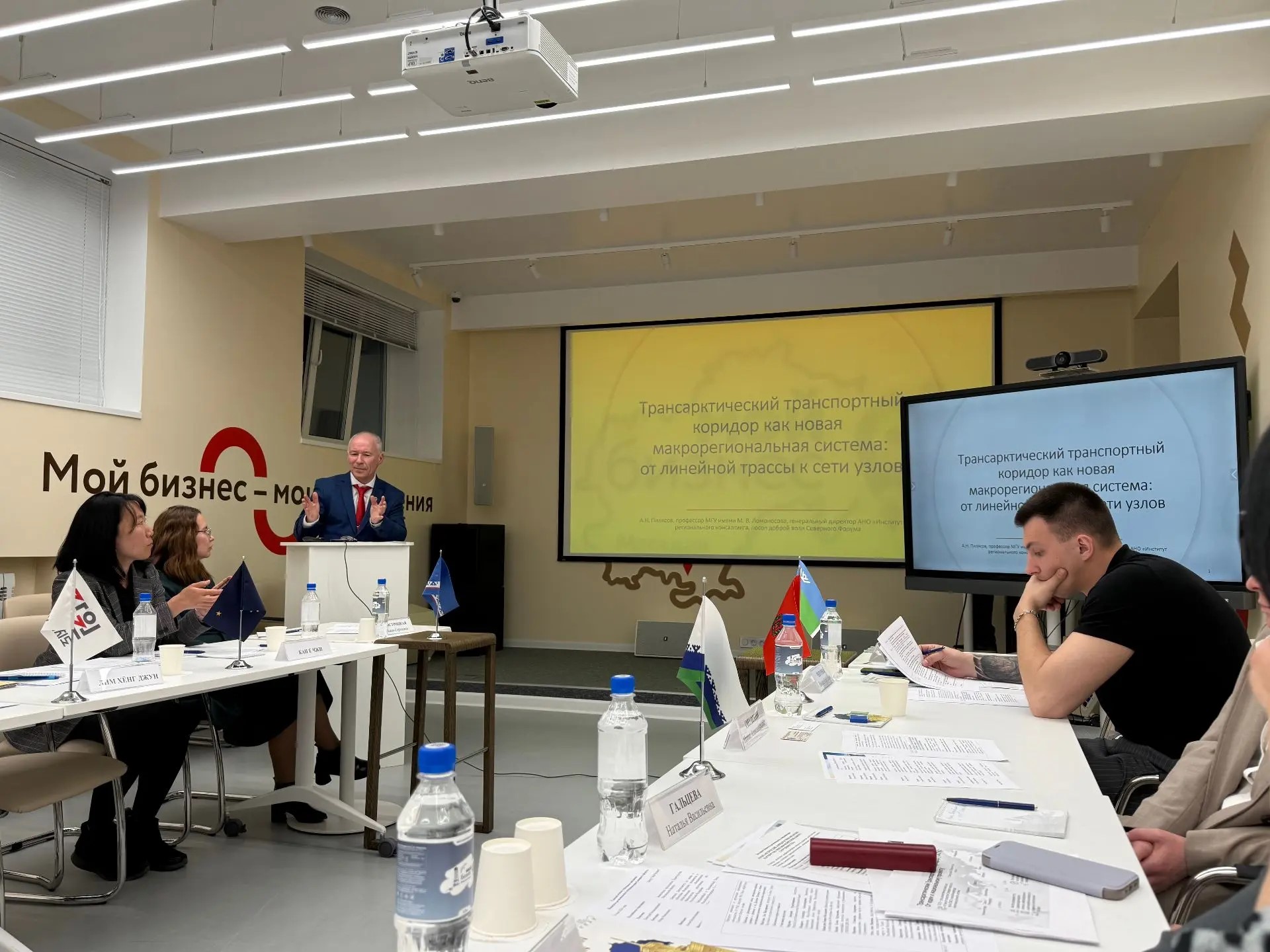
On May 14, in Magadan, on the sidelines of the meeting of the Northern Forum Regional Coordinators Committee, a strategic session titled "Trans-Arctic Transport Corridor: From the Northern Sea Route to the Arctic-Pacific Partnership of Cities and Regions" was held.
On May 14, in Magadan, on the sidelines of the meeting of the Northern Forum Regional Coordinators Committee, a strategic session titled "Trans-Arctic Transport Corridor: From the Northern Sea Route to the Arctic-Pacific Partnership of Cities and Regions" was held.
Alexander Pilyasov, Director General of the Institute of Regional Consulting, Professor at Lomonosov Moscow State University, Doctor of Geographical Sciences, and a Northern Forum Goodwill Ambassador, served as the keynote speaker and moderator of the session. His presentation, "The Trans-Arctic Transport Corridor as a New Macro-Regional System: From a Linear Route to a Network of Hubs," set a high standard for the entire discussion. Professor Pilyasov presented a conceptual rethinking of the Northern Sea Route, proposing to view it not merely as a linear transit route from Murmansk to the Bering Strait, but as a complex, distributed macro-regional system of focal nodes and hubs connecting Arctic and Pacific territories into a unified economic, scientific, and cultural space. This approach transforms the potential transit corridor into a real driver of development for cities and regions across the entire Arctic-Pacific belt.
The discussion that followed reaffirmed the high relevance of the topic, bringing together a distinguished pool of participants who attended both in person and via videoconference.
Valery Semenov, Deputy Governor of the Krasnoyarsk Krai, shared the region's vision as one of the key links in the future transport framework. He emphasized that for the Krasnoyarsk Krai, which possesses powerful industrial and logistical potential, integration into Trans-Arctic routes offers an opportunity to diversify export flows and establish new industrial centers along the Arctic coast, linking high-latitude routes with the Yenisei inland waterway system.
Alexander Kugaevsky, Advisor to the Rector of the M.K. Ammosov North-Eastern Federal University, Deputy Chairman of the Public Council of the Ministry for the Development of the Russian Far East and Arctic, Candidate of Economic Sciences, and a Northern Forum Goodwill Ambassador, focused his attention on the human dimension of the project. He noted that transforming the corridor's focal points into a network of fully functional hubs is impossible without enriching them with scientific and educational competencies, conducting specialized research on economic parameters, and training qualified personnel.
The scientific framework of the topic was presented by Natalia Galtseva, Deputy Director for Scientific Work at the N.A. Shilo North-East Interdisciplinary Scientific Research Institute of the Far Eastern Branch of the Russian Academy of Sciences (FEB RAS). She highlighted the resource, social, and economic foundations of the Trans-Arctic corridor.