


Articles
- Details
Many international organizations and affiliations work within the Northern Forum´s community to make the Northern regional affairs and issues stronger. Most of these organizations are public but the community also includes associations of common stakeholders. All of them have though one thing in common; to promote Northern affairs.
Inter – governmental (IGOs) and non - governmental organizations (NGOs) have assumed an important role in the development of regional Northern cooperation.
Below is a list of international organizations in the North.
 |
 |
 |
 |
 |
 |
 |
 |
- Details
- Details
 The Arctic States are eight in total; Norway, Sweden, Finland, Russia, the United States (Alaska), Denmark (Greenland), Canada and Iceland. Within the Arctic area of these 8 states, there lives around 4 million people or 2% of the total population of the Arctic countries (including only Alaska of the US).
The eight Arctic states work closely together on numerous Arctic-related issues, both through the Arctic Council and in various other forums.
Between the WW II and the late 20th century, the Arctic was one of the playgrounds of the cold war experiencing nuclear armament and frozen international relations. The cold war political environment left the area distant and remote for the people outside the region and it was not until the emergence of the perestroika in the Soviet Union which gradually brought the cold war enemies closer and eventually to the same table in 1989.
The first purely Arctic oriented meeting of the eight Arctic countries took place in Rovaniemi Finland in september 1989. The topic of the meeting was the fragile Arctic environment and a potential for joint effort in tackeling the very delicate but urgent issue. After intensive cooperation for the next two years, the Arctic Environmental Protection Strategy was initiated in 1991. The AEPS concentrated on cooperation in scientific research and sharing of data on effects of pollution as well as assessing the potential environmental impacts of development activities in the Arctic through its four specific measures, namely Arctic Monitoring and Assessment Programme, Protection of the Marine Environment in the Arctic, Emergency Prevention,Preparedness and Response in the Arctic and Conservation of Arctic Flora and Fauna.
The cooperation around the AEPS was quite untraditional for many reasons. First, it was one of the first venues where the cold war parties cooperated together to reach a common goal and secondly it became one of the very few inter-governmental institutions including indigenous peoples of the region in the work from the beginning.
It became, however, soon clear that the Arctic issues and the change happening in the Arctic environment would have such an immense impact globally that it was decided that the AEPS would step aside and new inter-governmental high level forum would be created to deal Arctic environmental issues. In 1996, the Arctic Council, with membership of all eight Arctic states and permanent participation of regional indigenous peoples' associations, was established to promote cooperation, coordination and interaction in issues of sustainable development and environmental protection.
Yet a new development on the Arctic cooperation occured in May 2011, when the Arctic states signed the first legally binding agreement established under the auspices of the Arctic Council. The Agreement on Cooperation on Aeronautical and Maritime Search and Rescue in the Arctic lays down a framework to strengthen search and rescue cooperation and coordination in the Arctic airspace and waters.
In addition to the official state-level cooperation taking place in the Arctic Council, two other cooperation themes in the Arctic have been indentified by the Arctic Human Develoment Report.
The first theme focuses on the increasing circumpolar cooperation by indigenous people's organizations and sub national governments, culminating in notion "North meets North." In facing harsh socio-economic realities and degradation of human rights the Indigenous peoples and local communities have realized the value of cross border cooperation in their battle for human rights and increased socio-economic development. Organizations such as RAIPON (Russian Association of Indigenous Peoples of the North) and the Saami Council have been working towards the international recognition of indigenous people's rights and the consideration of traditional livelihoods in national politics.
The second theme focuses on the relationship between the Arctic and the outside world. The first signs of interest in the Arctic from southern latitudes were during the Cold War, because of the military issues. But the amount of natural resources and potential trans-Arctic transportation routes make the region strategically and economically relevant for most European, North-American and North-East Asian countries. The economies of the North are closely related and the importance of the Arctic region will rise due to ever increasing demand for resources. Also globalization will keep bringing in new actors to the Arctic and cooperation continues to grow in various fields in the future.
For more information on a region of your interest, please use clickable region names below.
| Arctic Council states | Northern Forum Regions | |
| Canada | Akureyri (Iceland) | Murmanskaya Oblast (Russia) - Observer |
| Greenland | Chukotskiy AO(Russia) | |
| Finland | Gangwon-do (South Korea) | |
| Iceland | Kamchatskiy Kray (Russia) | |
| Norway | Khanty - Mansiyskiy AO (Russia) | |
| Russia | Sakha Republic (Yakutia) (Russia) | |
| Sweden | Yamalo-Nenetskiy AO (Russia) | |
| United States |
- Details
- Details
- Details
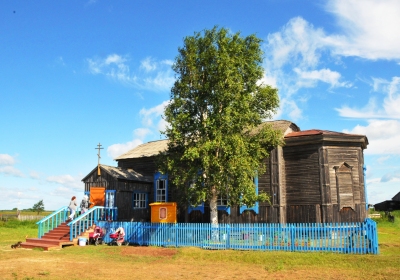
Rural Development is not an active project, yet it is an already-running initiative that has been showcased on the 2013 General Assembly of the Northern Forum by a Head of Shapsha village from Khanty-Mansiyskiy AO, Russia - a village with impressive results of sustainability.
Climate change, increasing energy costs and the need to reduce the production of greenhouse gas emissions have generated a new focus on sustainable energy production, particularly in remote and northern regions. Significant work has been done through the Arctic Council to look at oil and gas resources, but little focus has been given to the development of resources and technologies to improve energy efficiency and energy security. There is a need to have a closer look at sustainable energy technologies, their development and application, as a way to support more sustainable economic and community development. The 2008 SDWG Energy Report to Ministers recommended an Arctic Renewable Energy Assessment to report on” the status of renewable energy developments in the northern circumpolar region, and to assist in identifying a research agenda in relations to Arctic renewable energy issues.” (p.28)
Latest activities:
Presentation by Lyubov Ovcheryukova, head of Shapsha village of the Khanty-Mansiysk AO, at the RCC Meeting in Moscow in October 2013 – about work carried out on sustainable development in the village.
Leading region: Khanty-Mansiysk
Contact:
Lyubov Ovcheryukova, Head of Shapsha village, Khanty-Mansiysk AO; tel: +7(3467)37-24-33, 37-25-15;
picture link: http://hmrn.ru
- Details
- Details
- Details
As the dangerous infectious diseases kept spreading across the North, the damage from this made the international community to pay more and more attention to this problem. In 1998, an Arctic Council SDWG project called ICS was launched as a joint response to threat of the infection. This project was meant to be a circumpolar epidemic surveillance body.
Next decade brought TB to the scope of infections in the North, as its severity was growing higher. This circumstance pushed more regions to join international cooperation. In 2006 ICS has launched a tuberculosis working group. This working group consists of members from Canada, Northern Sweden, northern regions of Russia and the Arctic region of the United States (Alaska). In 2008, the Northern Forum has joined with a new project called “Infectious diseases Circumpolar Surveillance Network”.
Currently this project is implemented by participating organizations from member regions, accompanied by specialists from ex-members of the Northern Forum – State of Alaska and Saint-Petersburg. Despite this project was initiated with aim to cover all types of infectious threats, its focus has moved with time to the TB issue, what later launched the separate Northern Forum working group.
Currently, this project has:
- A determined set of aims and tasks for the TB Working Group
- An executive body of the Working Group and its plan of research
- A TB Working Group that engages practically all Circumpolar states in its activity
- Settled core questions on composition of the international TB database and a position on data transfer between the participants of the WG.
- Formulated an aim for joint research on study of TB in the Northern territories.
- To develop data transfer protocols and provide adequate security measures
- To carry out a retrospective research on TB infection cases for the last 5-6 years
- To build an algorithmic-mathematic model of development of TB epidemiologic process in the Circumpolar North regions.
- To execute international moderation of events dedicated to lower acuteness of the TB epidemiological situation in the Circumpolar North, with an accent on the Indigenous peoples of the North
Core aims for the TB WG for 2014-2015 and in perspective:
Secretariat recommendations:
Under Khanty-Mansiysk chairmanship:
- To elect members of the Working group.
- To outline a working plan for the following 2 years and forward it to the Secretariat no later than 18th of January 2014.
- To hold a seminar in Russia in 2014 to determine opportunities for extension of interregional participation in the project to continue cooperation with the Arctic Council on this project.
- To present a report to the RCC in 2014.
Lead region: Khanty-Mansiysk
Participants:
Sakha - Kravchenko Alexander Fyodorovich, Director for the State Budget Organization of the Sakha Republic, NPC “Phtisiatria” +79246609902 ;
Vinokurova Mariya Konstantinovna, Deputy Director for the State Budget Organization of the Sakha Republic, NPC “Phtisiatria” +79644239494
- Details
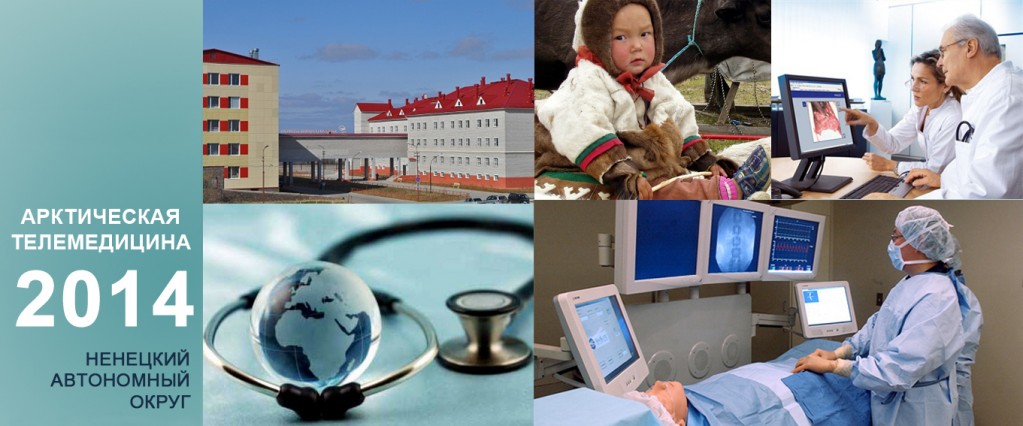
The Northern regions are usually sparcely populated and communication between settlements is often either hard, or not possible. In conditions like this, support of the modern healthcare system capable of treating serious diseases appears as incredibly expensive and nearly impossible. However, use of modern technologies can sufficiently simplify and cheapen functioning of remote healthcare centers.
This pilot project has reached certain success in workshops and experience exchange in Anchorage, Khanty-Mansiysk, Yakutsk, Seattle and Pyeonchang. Experts from Khanty-Mansiysk and the Sakha Republic held meetings with experts from the United States, Republic of Korea (Gangwon) and Finland – what accelerated the inception of this technology in life. Priority topic on all meetings remains the technological aspect of telemedicine initiative.
During work of this initiative, specialists from Khanty-Mansiysk and Sakha held meetings with experts from the United States, South Korea (Gangwon Province) and Finland – what allowed toincept this remote treatment technology into life. Experience exchange is held mostly around technical issues.
This project is funded by participating organizations
Contact: Nikolayev Matvei Khristoforovich, Sakha Healthcare Ministry, Coordinator for Telemedicine, Head of Telemedicine Department, State budget organization YRMIAC , m/t. +7(914)224-68-52, landline. +7(4112)42-96-51;
Participants: Khanty-Mansiysk: Tsaregorodcev Alexander Leonidovich,
Deputy Director for science in URIIT Institute, Khanty-Mansiysk AO, t. +7(3467)35-91-35; email:
picture link: http://internetmedicine.com
- Details
The Northern regions are usually sparcely populated and communication between settlements is often either hard, or not possible. In conditions like this, support of the modern healthcare system capable of treating serious diseases appears as incredibly expensive and nearly impossible. However, use of modern technologies can sufficiently simplify and cheapen functioning of remote healthcare centers.
This pilot project has reached certain success in workshops and experience exchange in Anchorage, Khanty-Mansiysk, Yakutsk, Seattle and Pyeonchang. Experts from Khanty-Mansiysk and the Sakha Republic held meetings with experts from the United States, Republic of Korea (Gangwon) and Finland – what accelerated the inception of this technology in life. Priority topic on all meetings remains the technological aspect of telemedicine initiative.
During work of this initiative, specialists from Khanty-Mansiysk and Sakha held meetings with experts from the United States, South Korea (Gangwon Province) and Finland – what allowed toincept this remote treatment technology into life. Experience exchange is held mostly around technical issues.
This project is funded by participating organizations
Contact: Tsaregorodcev Alexander Leonidovich,
Deputy Director for science in URIIT Institute, Khanty-Mansiysk AO, t. +7(3467)35-91-35; email:
- Details
Dangerous situation with alcohol and drug addiction in the Russian North and state of Alaska has forced the Northern Forum to launch a working group in 2006 to address improvement of rehabilitation programs in Russia and in Alaska. Firstly the working group consisted of Vologda Oblast, Komi Republic, Sakha Republic, city of St. Petersburg, Khanty-Mansiysk and Chukotka AO. Currenty, all events are held by the Sakha Republic and Khanty-Mansiysk AO. This project is led by the Khanty-Mansiysk.
Aim of the project: to improve rehabilitation programs, treatment and rehabilitation of drug and alcohol addicted individuals located in the Northern Forum member regions.
Held events:
- Training seminars attended by American specialists. Resulting publications: “Modern approaches to treatment and rehabilitation of alcohol and drug addictions in the North”, Khanty-Mansiysk 2006; “Training course for treatment and prevention of dangerous addictions in the Nort”h, Khanty-Mansiysk 2007; videoconference “Stages and strategies of short-term outpatient rehabilitation of drug and alcohol addicted patients in the North”, Khanty-Mansiysk 2008.
- Khanty-Mansiysk psycho-neurological dispensary hosted an experimental platform for prevention and rehab of drug addicted individuals, 2008; http://narkohealth.ru
- Khanty-Mansiysk delegates travelled to the United States to research current working concept and rehab standards of drug addicted patients in the USA, 2008
- A rehabilitation program for addicted patients in the North was developed and incepted.
- Clarification and updates of the working group’s participants list and of the Northern Forum member regions willing to participate in the project (First half of 2014)
- Organization of the working group’s assembly to develop and approve the group’s working plan for 2014-2015 (First half of 2014)
- Distribution of treatment model and rehabilitation of addicted patients in local hospitals, NF member regions (2014-2015)
- Experience exchange, publication of handbooks, round tables, science conferences etc. (2014-2015)
To support this project and inform the Northern Forum of its progress, Mr. Novikov has given a presentation during the RCC meeting in October 2013.
Leading region: Khanty-Mansiysk
Contacts: Novikov Andrei Petrovich, Chief medical officer at the Khanty-Mansiysk AO Surgut State Psycho-neurological clinic;mobile +7(90281) 46-1-58 ;
Participants
Sakha - Matveyeva Nyurguyana Petrovna, MD-PhD, NF working group on Healthy Lifestyle, mobile +7(914)100-33-99, ;
Chukotka - ?
Yukon - ?