


- Информация о материале
Society and Culture program brings together a variety of projects that concern social and cultural issues with a closer focus on social problems. As social problems are an endless source for finding solutions and new approaches, in the North their effects sometimes are even more dangerous - even threating whole communities and their residents individually, rather than single human beings. Projects are built around strictly psychological and sociological working groups, medical working groups and IT cooperation schemes.
Projects in this program are: Suicide Prevention, Telemedicine, Infectious Diseases
- Информация о материале
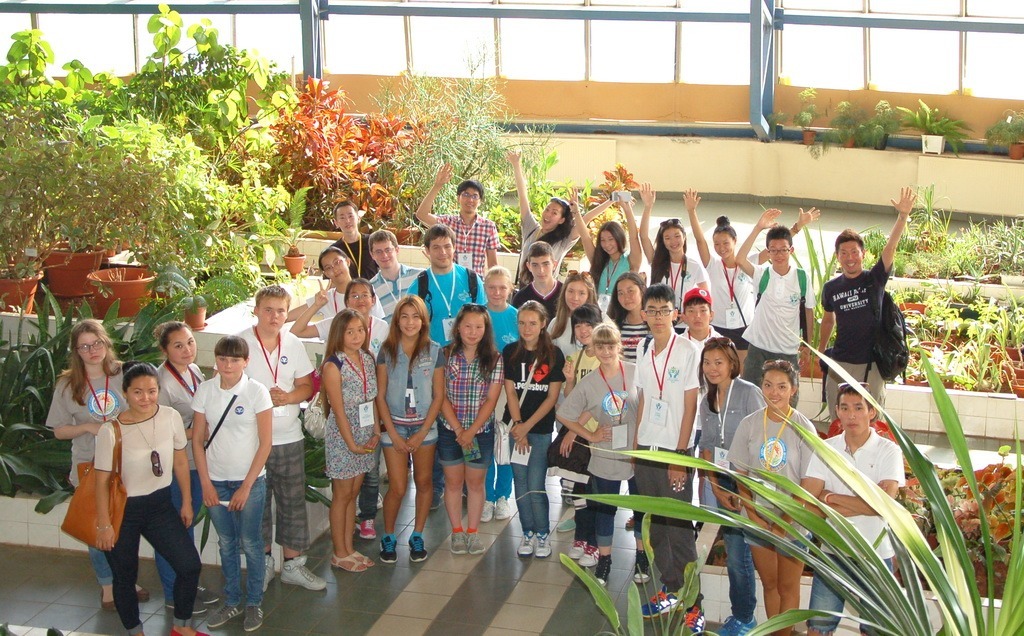
Youth Eco Forum is a regular ecological-educational event held by the Northern Forum since 2001. The event is an opportunity for the NF member region school students to meet fellows from the other regions, have a good time and share experience of ecological problems from their home lands. Focus topics are climate change, raising public awareness of eco issues, urban ecology and so on. Topics change for every new Forum event.
The Forum participants tend to carry on relationships started on the Forum through social networks; and those who choose eco-oriented profession, carry on cooperation in future as well. The Forums are held practically every year for the last decade – with last one being held in Yukon (Whitehorse) in 2012 on topic of “Climate Change and Creating Balance”.
Youth Eco Forum 2014 was held in Yakutsk, Sakha Republic (Yakutia) and was dedicated to problems of the Northern cities. Follow the link to learn more.
- Информация о материале
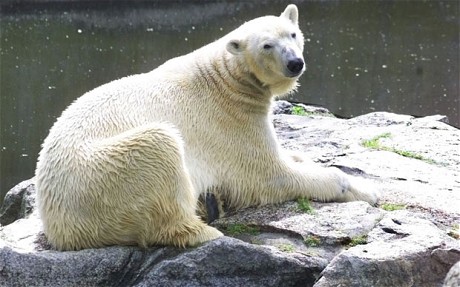
Leading region: Sakha
CONTACTS: Safonov Luka Nikolayevich, Orto Doidu Zoo Director, Safonova Natalia Vladimirovna, Orto Doidu Zoo Deputy Director; , +7(4112)22-52-59
This project was started to unite the Northern Zoos for joint salvation of common problems of keeping a zoo in the North and in perspective to establish an animal exchange. The project unites large regional-scale zoos that are able to keep a variety of animals including rare and endangered species. Maintaining and supporting those animals often is too complicated and expensive for the smaller zoos, so international cooperation in this field appears as necessary for their conservation.
- Информация о материале
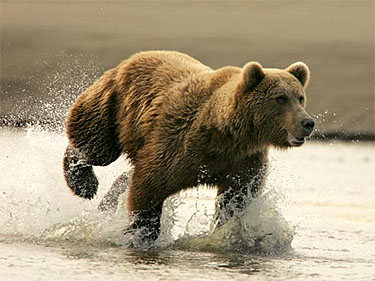
Regions of the Northern Forum generally know about bears very well – contacts of humans and brown bears in settlements or near them are not rare. As this is a very dangerous neighborhood practice, the BBWG’s work is dedicated to researching and creating conditions where bears and humans can co-exist without interaction. As this is mostly an experience-exchange initiative, this is a great opportunity for beginner biologists and nature conservationists to apply their knowledge in practice and learn from the experienced ones.
This Working group consists of experts, scientists, regional administrations’ employees and even the whole organizations as well – good example of it is Swedish Orsa Gronklitt Predator Park zoo.
Project progress (2011-2013)
Meeting in Orsa Gronklitt Predator Park (Dalarna, Sweden) in August 2011 – 13 participants from 7 regions of 4 states. On this meeting, a working plan was discussed and participants exchanged experience on controlling predator populations (that is - wolves). Planned meeting in Khanty-Mansiysk was cancelled due to financial hardships.
2013 Working plan:
- Monthly e-mail communication to exchange ideas and updates on projects
- Continuation of work on gene analysis of the Far Eastern Brown Bear (Far East Russia)
- Grant sourcing work to broaden the scope of the project
- Consideration of holding a meeting in Orsa, Dalarna (Sweden) in December 2013
- Continuation of joint work with an IUCN expert group on Northern Asian Brown Bear (many of the project participants are also participants of the IUCN expert group)
picture courtesy: bearsoftheworld.net
- Информация о материале
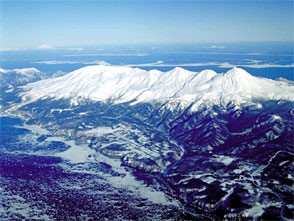
The Environment program consists of several projects one way or another concerning environmental issues. For the Northern Forum history, involvement in this program has been steadily growing according to growing challenges in the Northern environments.
Current Environment projects are: Northern Zoos Cooperation, Youth Eco Forum, Water & Climate Change working group and Brown Bear working group. Northern Zoos Cooperation is a strong project that has been active for a while in bringing zoos of the North together. Youth Eco Forum is an event project of a completely different nature - being an educational forum for school students, aimed at drafting resolutions on top eco problems of the North. Water and Climate Change WG is a research working group dedicated on studying effects of water floods; and in a similar manner, the Brown Bear WG is a scientific research group - but with an aim of making co-existence of humans and brown bears in the Northern communities safe.
- Информация о материале
- Информация о материале
Floods are the World-scale problem. In the North, this problem has its unique regional features. As rivers freeze during the winter time, ice break-up in spring time can cause ice jams and lead to so-called break-up flooding. As this happens every spring and has caused major floods, it is hard to underestimate the importance of this project.
The Northern Forum has served since its inception as a coordinator to provide assistance for emergencies in the North. In the past, assistance has been provided to find funding for the Komi oil spill (1993) and to provide humanitarian assistance during the two catastrophic floods endured by the Republic of Sakha in 1998 and 2001.
The Northern Forum organized with the Center for Excellence in Emergency Response a workshop on Severe Cold Climate Emergency Response in 2002, which focused on oil spills and floods and brought its recommendations to the Arctic Council.
Following two catastrophic floods in the Republic of Sakha (Yakutia), where the Northern Forum was involved in providing assistance to the victims of the flood, several regions decided to cooperate on flood forecasting and monitoring, using the latest technologies available. In 2004, the participants in the 1st Workshop on Flood Satellite Forecasting created the Northern Forum Flood Working Group, which has been meeting every year since. The Working Group is also working with the Arctic Council's Committee on Emergency Prevention, Preparedness and Response (EPPR) as the EPPR Committee has extended its mandate to include natural disasters (read the report from the EPPR workshop in Anadyr, Chukotka, August 2009)
During the Working Group’s activities, an agreement with Canadian C-CORE company was signed to provide satellite images in high resolution to hydrologists, so that action teams could predict areas of possible ice jams or effectively track the existing ones; as well as evaluating the overall scale of a potential flooding. Currently this Working Group is working towards creation of an expanded database of ice movement monitoring data.
More recently, Project coordinator Nikita Tananayev has given a presentation on the Working Group’s activities in 2012-2013. This included information on meetings in St.Jones (Canada) in 2012 and in Khanty-Mansiysk in 2013, where the Working Groups has discussed application of satellite technologies for prevention and handling of consequences of nature disasters (that is - floods). As a result the Working Group has reached an agreement on development of the URIIT-based center for satellite information.
Previous Workshops:
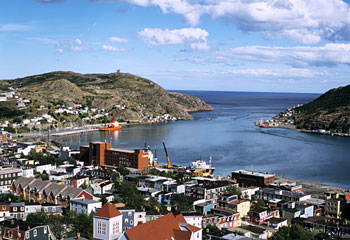
5th Workshop - Satellite monitoring for climate change
March 26-30, 2012
St. John, Newfoundland (Canada)
A workshop took place at the company C-CORE in Canada to discuss and plan cooperation on satellite monitoring of climate change impacts, such as floods, melting permafrost, forest fires and others. C-CORE has been providing free satellite imagery to regions of the Northern Forum for many years, and was the host of this year's meeting. The group decided to change its name from Flood Working Group to Water and Climate Change Working Group. The Ugra Institute for Information Technologies will become a partner in Polar View, and training was organized for them at C-CORE following the workshop. The Working Group adopted several items for its work plan that will be developed between interested regions such as the creation of an international database of ice freeze up and break up on Northern rivers, using existing databases, which will be hosted by URIIT in their supercomputer. Exchanges of information regarding ice break up models were also discussed.
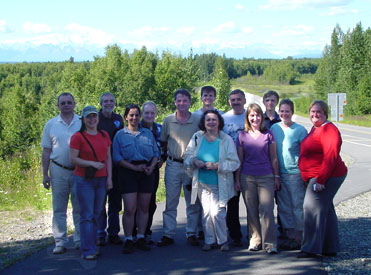
4th Flood Working Group Workshop
Alaska
July 16-20, 2007
The 4th Flood Working Group Workshop was held in Anchorage, Alaska (US) as a NATO Advanced Research Workshop. The focus was on satellite imagery for flood forecasting, flood warning processes, coastal erosion and climate change related issues and flood preparedness. The Workshop was followed July 23-27 by a training session at the Alaska-Pacific River Center for designated trainees from Sakha and Khanty-Mansiysk.
3rd Flood Working Group Meeting
Yakutsk, Sakha Republic, Yakutia (Russia)
March 9-12, 2006
The 3rd meeting was held in Yakutsk, hosted by the Ministries of Environmental Protection, Emergencies and External Affairs of the Sakha Republic. Over 60 specialists participated in the meeting, which included a full day of presentations, a field day on the Lena River to study preventative measures against flooding and two days of meetings dedicated to the provision of satellite images by C-CORE and the development of a concrete work plan for the coming two years. It was agreed that training sessions would be organized in the summer of 2006 in Alaska and Alberta, and work would be started regarding the translation of specialized literature in English and Russian. The work group will continue to collaborate on refining mathematics and physical modeling of flooding in order to provide a better assessment of flood risks.
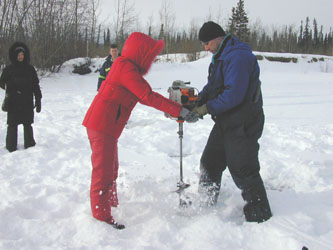
2nd Flood Working Group meeting
Whitehorse, Yukon (Canada)
February 2005
The participants received a presentation by C-CORE, a Canadian company that provides images from the Radarsat satellite, which is of great interest to Northern regions because the images can be received even in cloudy weather or at night. Canadian regions already benefit from this technology and Alaska has an agreement with C-CORE to receive these images as well. The workshop allowed several Russian participants to enter into agreements to get these images too. The other highlight of the workshop was the development of close cooperation between several regions on developing models for break-up, ice jams, and flood forecasting. The supercomputer available at the Ugra Institute for Information Technologies in Khanty-Mansiisk, the host of the first workshop, will be a very valuable tool to work out models. The participants also agreed that translating materials and documents into English and Russian should be given a priority, in order to avoid duplicating work and disseminating important information.
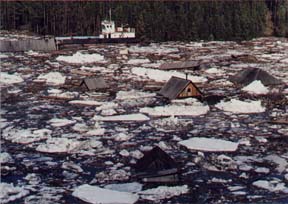
1st Workshop on Flood Satellite Forecasting
Khanty-Mansiisk (Russia)
May 2004
The workshop was hosted at the Ugra Research Institute for Information Technologies (URIIT), which features a Sunfire Supercomputer, an Earth Remote Sensing Center, a large antenna and very advanced GIS and mapping technology. The workshop featured presentations on flood satellite forecasting by Russian, Canadian and Alaskan speakers and Integrated Decision Support Systems applied to floods from Alaska and Colorado. A Working Group was formed as a result of the workshop, and a protocol of agreement signed to continue cooperation between participants.
CONTACTS:
Khanty-Mansiysk:Tsaregorodcev Alexander Leonidovich, Deputy Director for science in URIIT Institute, Khanty-Mansiysk AO, t. +7(3467)35-91-35; email:
Sakha: Tananayev Nikita Ivanovich, head of the Igarka lab of Institute for Permafrost (Russian Academy of Science) +7(39172) 21-42-6, +7 (953) 588-38-02,
- Информация о материале
 Climate change is a forefront of concerns in the North and the Arctic, where its effects are more noticeable than in other parts of the planet and can impact very drastically the local populations.
See the latest Arctic report card by NOAA.
The Province of Quebec organized a Permafrost Degradation workshop in Quebec City, April 19 and 20, 2012, just after the Regional Coordinators' meeting to enable the regions to exchange experiences and know-how.
The Northern Forum's Flood Working Group, concerned with severe climate change impacts, has now become the Water and Climate Change Working Group, dealing not only with flooding but other aspects such as coastal erosion, wildfires, permafrost melting etc.
For more information on climate change, go to the Arctic Portal Portal on Climate Change.
- Информация о материале

Северный Форум ищет возможности для усиления связей среди всех северян, особенно среди принимающих решения. Членство доступно для региональных и субрегиональных правительств, муниципалитетов (без региональных субьектов), частных компаний, неправительственных и некоммерческх организаций.
Регионы-члены Северного Форума представлены Губернаторами, Премьерами, Президентами или другими высшими органами региональной власти; либо их делегаты и имеют право голоса и присутствия на всех таких мероприятиях.
IМежрегиональная деятельность поддерживается Северным Форумом как инструмент для укрепления сотрудничества и понимания между регионами. Дружеские и деловые связи, созданные во время визитов делегаций с региона в регион очень важны для строительства здоровых международных отношений.
В то время, как мероприятия Северного Форума имеют широкую основу, организация четко видит что экономическое развитие является ключевым вопросом на Севере. Поэтому, расширяя свое региональное членство, Северный Форум активно ищет новых членов из коммерческого сектора, так как устойчивые экономические структуры не могут быть развиты без поддержки бизнес-сообщества. Северный Форум, потому, предлагает широкие возможности бизнес-партнерства, включая возможность ассоциации с торгово-промышленными палатами.
Бизнес-партнеры имеют право посещать все открытые совещания Северного Форума, где они могут встречаться с представителями региональных властей и других членов Северного Форума и обсуждать дела по бизнесу, торговле и другие возможности или трудности. Базы данных Северного Форума, публикации и другие ресурсы также доступны членам. Членство региональных властей ускоряет развитие контактов с бизнес-партнерами Северного Форума в проектах, предложенных в их регионах. Бизнес партнерство может также использовать офис Секретариата в г.Якутске в деловых целях.
Согласно решению Совета губернаторов в Резолюции №163, членские взносы составляют:
- Для регионов:
-
Для регионов с численностью населения до 100 тысяч человек 5000 (Пять тысяч) долларов США; Для регионов с численностью населения от 100 до 200 тысяч человек 9000 (Девять тысяч) долларов США; Для регионов с численностью населения от 200 до 300 тысяч человек 13000 (Тринадцать тысяч) долларов США; Для регионов с численностью населения от 300 до 400 тысяч человек 17000 (Семнадцать тысяч) долларов США; Для регионов с численностью населения от 400 до 500 тысяч человек 21000 (Двадцать одна тысяча) долларов США; Для регионов с численностью населения от 500 тысяч человек и более 25000 (Двадцать пять тысяч) долларов США.
- Для бизнес-партнеров:
-
-
Для предприятий с численностью работающих менее 50 человек 1000 (Одна тысяча) долларов США; Для предприятий с численностью работающих 51-100 человек 2500 (Две тысячи пятьсот) долларов США; Для предприятий с численностью работающих более 100 человек 5000 (Пять тысяч) долларов США;
-
- Информация о материале
Северный Форум является некоммерческой организацией - это означает, что организация не занимается коммерческой деятельностью, а существует за счет членских взносов, грантов и пожертвований.
Пожертвования для Северного Форума позволят укрепить роль регионов Севера в международной деятельности, даст им больше возможности делиться знаниями и опытом, а также поддержат инициативы по устойчивому развитию и приведению в жизнь инициатив по охране окружающей среды. Иными словами - Ваше пожертвование пойдет в счет улучшения качества жизни человека на Севере.
Если Вы желаете внести свое пожертвование, то его уровни представлены ниже. В большинстве стран мира, средства на пожертвования не облагаются налогом.
- $ 50
- $ 100
- $ 200
- $ 500
- $ 1000
Корпоративное спонсорство: контактируйте с нами по адресу
Пожертвования принимаются путем отправки чека в Секретариат, отправки факса с информацией кредитной карты, а также через интернет-платеж
Мы принимаем карты VISA и MasterCard. Мы гарантируем неприкосновенность и неразглашение Вашей персональной информации
- Информация о материале
Partnership |
|
|
Цель, деятельность и проекты Северного форума извлекают выгоду из доходов, полученных из членства и соглашений о сотрудничестве с организациями по всему миру. Организации заинтересованы в деятельности Северного Форума и с ними активно сотрудничают северные регионы. Департамент по экономическим и социальным вопросам ООН |
|
 |
Департамент по экономическим и социальным вопросам ООН (ДЭСВ) является частью Секретариата ООН, который финансируется за счет регулярных долевых взносов государств-членов ООН. Отдел был реорганизован в его нынешнем виде в 1997 году и c 2007 ДЭСВ возглавляет Ша Цзукан[1]. Заместитель Генерального секретаря по экономическим и социальным вопросам управляет ДЭСВ, консультирует Генерального секретаря по вопросами устойчивого социального и экономического развития, и поддерживает тесные отношения с правительствами, агентствами ООН и другими гражданскими организациями. Заместитель Генерального секретаря также созывает Исполнительный комитет по экономическим и социальным вопросам, сообщество Секретариата ООН для совместного планирования и разработки действий касательно экономических и социальных вопросов
|
| Статус Северного Форума: наблюдатель. | |
| Арктический Совет | |
 |
Оттавская декларация 1996 года положила начало Арктическому Совету, как межгосударственному форуму высокого уровня, для предоставления странам средства для продвижения сотрудничества, координации и взаимодействия между арктическими государствами с участием как общин коренных народов, так и всех остальных жителей Арктики по основным арктическим вопросам. В-основном эти вопросы затрагивают устойчивое развитие и охрану окружающей среды в Арктике. Членами Арктического совета являются: Канада, Дания (вкл. Гренландию и о-ва Фаро), Финляндия, Исландия, Норвегия, Швеция, Российская Федерация и США. В дополнение к основным участникам, Арктический совет имеет категории членства - "постоянный участник" и "наблюдатель". Статус Северного Форума - наблюдатель. http://www.arctic-council.org/index.php/en/about-us/arctic-council/observers |
Соглашения о сотрудничестве |
|
Университет Арктики (Uarctic) |
|
 |
Университет Арктики – это сеть университетов, колледжей и других организаций, работающих в сфере высшего образования и исследовательской деятельности на Севере. Наши участники делятся средствами, возможностями и опытом создания программ высшего образования, которые актуальны и доступны для северных студентов. Наша общая цель заключается в создании устойчивого и постоянно развивающегося циркумполярного региона, путем предоставления благоприятных условий для северян и северных общин через образование и обмен знаниями. Университет Арктики содействует развитию образования, который, по своему характеру, является циркумполярным, междисциплинарным и разнообразным. Университет использует общие средства для решения проблем региона. Университет Арктики признает неотъемлемую роль коренных народов в северном образовании и стремится учесть их видение в своей деятельности. |
| United Nations Development Program & Forum of regional governments and global associations of regions (FOGAR) | |
|
|
Letter of Agreement between UNDP, Northern Forum and FOGAR was signed on September 12, 2007 within the VIII NF General Assembly in Khanty-Mansiysk, Khanty-Mansiysk Autonomous Okrug-Yugra, Russia. |
| Non-Profit Partnership Center for the Preservation of Cultural and Historical Heritage “Electronic Memory of the Arctic” (EMA Project) | ||
 |
The cultural heritage of the Arctic, the history of the exploration of the Arctic and the life of the region’s inhabitants are highly important. However, these can often be hard to restore, because the information resources are rare and incomplete, have different formats and languages and is spread across many countries. Addressing this challenge, many national libraries and archives are digitalizing their collections in order to preserve them for the coming generations. The project“Electronic Memory of the Arctic (EMA)”aims to bring such electronic resources together, encompassing all the Arctic states. |
|
|
The EMA projecthas been designed to accumulate, digitalize, preserve and provide free access to the cultural and historical resources related to the circumpolar world, currently stored in different formats in national libraries, archives, museums and private collections. The project team has already established the technical framework for an easily accessible and searchable database, using state-of-the-art digital technologies.
Memorandum of Understanding and Cooperation betwee EMA and the Norrthern Forum was signed on October 18, 2013 within the XI NF General Assembly in Moscow, Russia. |
||
Cooperation with national leaders
In order to show the value, and improve the effectiveness, of the Northern Forum's region-to-region approach to international relations, the leaders of the Forum have engaged in dialogue with many national leaders from the Forum's member regions. Such contacts raise awareness of the Northern Forum, and its mission and activities. More importantly, they also indicate that this approach, in cooperation with national leaders, can produce practical results for Northern peoples.
- Информация о материале
Северный Форум – международная организация северных регионов, состоящая из 14 субнациональных регионов и муниципалитетов 5 стран. Зеленым цветом отмечены территории действующих членов Северного Форума.